WELCOME FRIENDS!!

WELCOME  FRIENDS!!
HUMMINGBIRD MIGRATION 2014
Showing posts with label Cassidy the one leg baby buzzard. Show all posts

Sunday, September 14, 2014

CATCHING UP WITH CASSIDY AND A LOOK AT ETHOLOGY


Hi Everybody!!
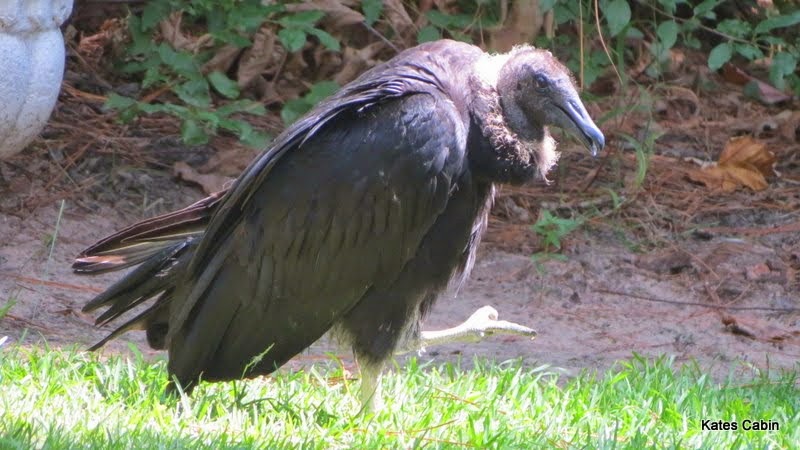
Tonight's photostudy reveals various behaviors of baby Cassidy, the buzzard. It is difficult to see the differences of these birds at a distance, but one legged Cassidy has brought us a gift. She has allowed us an up close and personal look at the different behaviors she is learning with a handicap of one working leg. It is very easy to find her even at a distance! You may be wondering why anybody would want to understand what a baby buzzard does. For me, it is clear: the more I understand about life around me, the more I understand about me and my relationship with all life. Shared below is the Wikipedia page on Ethology, the scientific and objective study of animal behavior.

Cassidy at the front gate.


Web Album photostudy link:
https://plus.google.com/u/0/photos/117645114459863049265/albums/6055026630346438545


Web Album Link:
https://plus.google.com/u/0/photos/117645114459863049265/albums/6055245272614646897


https://en.wikipedia.org/wiki/Ethology

Ethology

From Wikipedia, the free encyclopedia

Ethology is the scientific and objective study of animal behaviour, usually with a focus on behaviour under natural conditions.[1] Behaviourism is a term that also describes the scientific and objective study of animal behaviour, however, this term usually refers to the study of trained behavioural responses in a laboratory context.
Many naturalists have studied aspects of animal behaviour throughout history. The modern discipline of ethology is generally considered to have begun during the 1930s with the work of Dutch biologist Nikolaas Tinbergen and by Austrian biologists Konrad Lorenz and Karl von Frisch, joint winners of the 1973 Nobel Prize in Physiology or Medicine.[2] Ethology is a combination of laboratory and field science, with a strong relation to some other disciplines such as neuroanatomyecology, and evolution. Ethologists are typically interested in a behavioural process rather than in a particular animal group, and often study one type of behaviour, such as aggression, in a number of unrelated animals.
The desire to understand animals has made ethology a rapidly growing field. Since the turn of the 21st century, many aspects of animal communicationanimal emotionsanimal culturelearning, and even sexual conduct that experts long thought they understood, have been re-examined, and new conclusions reached. New fields have developed, such as neuroethology.
Understanding ethology or animal behaviour can be important in animal training. Considering the natural behaviours of different species or breeds enables the trainer to select the individuals best suited to perform the required task. It also enables the trainer to encourage the performance of naturally occurring behaviours and also the discontinuance of undesirable behaviours.[3]

Theory of evolution by natural selection and the beginnings of ethology[edit]

Because ethology is considered a topic of biology, ethologists have been concerned particularly with the evolution of behaviour and the understanding of behaviour in terms of the theory of natural selection. In one sense, the first modern ethologist was Charles Darwin, whose book The Expression of the Emotions in Man and Animals influenced many ethologists. He pursued his interest in behaviour by encouraging his protégé George Romanes, who investigated animal learning and intelligence using an anthropomorphic method, anecdotal cognitivism, that did not gain scientific support.
Other early ethologists, such as Oskar Heinroth and Julian Huxley, instead concentrated on behaviours that can be called instinctive, or natural, in that they occur in all members of a species under specified circumstances. Their beginning for studying the behaviour of a new species was to construct anethogram (a description of the main types of behaviour with their frequencies of occurrence).[4] This provided an objective, cumulative data-base of behaviour, which subsequent researchers could check and supplement.

Fixed action patterns, animal communication and modal action patterns[edit]

An important development, associated with the name of Konrad Lorenz though probably due more to his teacher, Oskar Heinroth, was the identification offixed action patterns (FAPs). Lorenz popularized FAPs as instinctive responses that would occur reliably in the presence of identifiable stimuli (called sign stimuli or releasing stimuli). These FAPs can be compared across species, and the similarities and differences between behaviour compared with the similarities and differences in morphology. A much quoted study[citation needed] of the Anatidae (ducks and geese) by Heinroth used this technique. Ethologists noted that sign stimuli were commonly features of the behaviour of conspecifics and they were able to prove how animal communication could be mediated by FAPs. One investigation of this kind was the study of thewaggle dance ("dance language") in bee communication by Karl von Frisch.[7] Lorenz subsequently developed a theory of the evolution of animal communication based on his observations of fixed action patterns and the circumstances in which they are expressed.

Instinct[edit]


Kelp Gull chicks peck at red spot on mother's beak to stimulate regurgitating reflex.
The Merriam-Webster dictionary defines instinct as a largely inheritable and unalterable tendency of an organism to make a complex and specific response to environmental stimuli without involving reason.[8] For ethologists, instinct means a series of predictable behaviours for fixed action patterns. Such schemes are only acted when a precise stimulating signal is present. When such signals act as communication among members of the same species, they are known as releasers. A notable example of a releaser is the beak movements in many bird species performed by the newly hatched chicks, which stimulates the mother's regurgitating process to feed her offspring.[9] Another well-known case is the classic experiments by Tinbergen on the Graylag Goose. Like similar waterfowl, the goose rolls a displaced egg near its nest back to the others with its beak. The sight of the displaced egg triggers this mechanism. If the egg is taken away, the animal continues with the behaviour, pulling its head back as if an imaginary egg is still being manoeuvred by the underside of its beak.[10] However, it also attempts to move other egg-shaped objects, such as a giant plaster egg, door knob, or even a volleyball back into the nest. Such objects, when they exaggerate the releasers found in natural objects, can elicit a stronger version of the behavior than the natural object, so that the goose ignores its own displaced egg in favour of the giant dummy egg. These exaggerated releasers for instincts were named supernormal stimuli by Tinbergen.[11] Tinbergen found he could produce supernormal stimuli for most instincts in animals—such as cardboard butterflies that male butterflies preferred to mate with if they had darker stripes than a real female, or dummy fish that a territorial male stickleback fish fought more violently than a real invading male if the dummy had a brighter-coloured underside. Harvard psychologist Deirdre Barrett wrote a book about how easily humans respond to supernormal stimuli for sexual, nurturing, feeding, and social instincts.[12] However, a behaviour only made of fixed action patterns would be particularly rigid and inefficient, reducing the probability of survival and reproduction, so the learning process has great importance, as does the ability to change the individual's responses based on its experience. It can be said[by whom?] that the more the brain is complex and the life of the individual long, the more its behaviour is "intelligent" (in the sense of being guided by experience rather than stereotyped FAPs).

Tinbergen's four questions for ethologists[edit]

Lorenz's collaborator, Niko Tinbergen, argued that ethology always needed to include four kinds of explanation in any instance of behaviour:
  • Function – How does the behaviour affect the animal's chances of survival and reproduction? Why does the animal respond that way instead of some other way?
  • Causation – What are the stimuli that elicit the response, and how has it been modified by recent learning?
  • Development – How does the behaviour change with age, and what early experiences are necessary for the animal to display the behaviour?
  • Evolutionary history – How does the behaviour compare with similar behaviour in related species, and how might it have begun through the process of phylogeny?
These explanations are complementary rather than mutually exclusive—all instances of behaviour require an explanation at each of these four levels. For example, the function of eating is to acquire nutrients (which ultimately aids survival and reproduction), but the immediate cause of eating is hunger (causation). Hunger and eating are evolutionarily ancient and are found in many species (evolutionary history), and develop early within an organism's lifespan (development). It is easy to confuse such questions—for example, to argue that people eat because they're hungry and not to acquire nutrients—without realizing that the reason people experience hunger is because it causes them to acquire nutrients.[35]

Growth of the field[edit]

Due to the work of Lorenz and Tinbergen, ethology developed strongly in continental Europe during the years prior to World War II.[4] After the war, Tinbergen moved to the University of Oxford, and ethology became stronger in the UK, with the additional influence of William ThorpeRobert Hinde, and Patrick Bateson at the Sub-department of Animal Behaviour of the University of Cambridge, located in the village of Madingley.[36] In this period, too, ethology began to develop strongly in North America.
Lorenz, Tinbergen, and von Frisch were jointly awarded the Nobel Prize in Physiology or Medicine in 1973 for their work of developing ethology.[37]
Ethology is now a well-recognised scientific discipline, and has a number of journals covering developments in the subject, such as Animal BehaviourAnimal WelfareApplied Animal Behaviour ScienceBehaviourBehavioral Ecology and Journal of Ethology. In 1972, the International Society for Human Ethology was founded to promote exchange of knowledge and opinions concerning human behaviour gained by applying ethological principles and methods and published their journal, The Human Ethology Bulletin. In 2008, in a paper published in the journalBehaviour, ethologist Peter Verbeek introduced the term "Peace Ethology" as a sub-discipline of Human Ethology that is concerned with issues of human conflict, conflict resolution, reconciliation, war, peacemaking, and peacekeeping behaviour.[38]
Today, along with ethologists, many biologists, zoologists, primatologists, anthropologists, veterinarians, and physicians study ethology and other related fields such as animal psychology, the study of animal social groups, animal cognition and animal welfare science


Web Album Link:
https://plus.google.com/u/0/photos/117645114459863049265/albums/6055252031761396097


...this is brendasue signing off from Rainbow Creek.  See you next time!


O+O

Sunday, August 31, 2014

CASSIDY DOES NOT EAT SNAKES! ESPECIALLY: NO COPPERHEADS!


Hi Everybody!!
You may think a headless snake is a bizarre opening photo and you would be correct!  As you know, I have a one leg buzzard who has moved in to the memory garden. I have been feeding birds for many years, but I have never fed the buzzards as they go hunt then return at night. They eat dead animals, not living ones. So this copperhead snake was experiment 104 of what does Cassidy like to eat. I chopped the head off and buried it (like Dad taught me).  Anyway,  I put the fresh dead snake on her picnic table for lunch. She did not eat it. She threw it on the ground. I am marking snake off the menu board for Cassidy. I have shared info below from Wikipedia about copperhead snakes. If you live near or go to woods in the South (States), you really should know about this snake.


https://en.wikipedia.org/wiki/Agkistrodon_contortrix

Agkistrodon contortrix

From Wikipedia, the free encyclopedia
Agkistrodon contortrix is a species of venomous snake endemic to North America, a member of the Crotalinae (pit viper) subfamily. The common name for the species is the copperhead. The behavior of Agkistrodon contortrix may lead to accidental encounters with humans. Five subspecies are currently recognized, including the nominate subspecies described here.[2]
Agkistrodon contortrix
Copperhead05.jpg
Conservation status
Scientific classification
Kingdom:Animalia
Phylum:Chordata
Subphylum:Vertebrata
Class:Reptilia
Order:Squamata
Suborder:Serpentes
Family:Viperidae
Subfamily:Crotalinae
Genus:Agkistrodon
Species:A. contortrix
Binomial name
Agkistrodon contortrix
(Linnaeus, 1766)
Agkistrodon contortrix range.png

Description[edit]


Detail of head
Adults usually grow to a total length (including tail) of 50–95 cm (20–37 in), although some may exceed 1 m (3.3 ft). Males are usually larger than females. The maximum length reported for this species is 134.6 cm (53.0 in) for A. c. mokasen (Ditmars, 1931). Brimley (1944) mentions a specimen of A. c. mokasen from Chapel Hill, North Carolina, that was "four feet, six inches" (137.2 cm), but this may have been an approximation. The maximum length for A. c. contortrix is 132.1 cm (52.0 in) (Conant, 1958).[3]
The body is relatively stout and the head is broad and distinct from the neck. Because the snout slopes down and back, it appears less blunt than that of the cottonmouth, A. piscivorus. Consequently, the top of the head extends further forward than the mouth.[4]
The scalation includes 21–25 (usually 23) rows of dorsal scales at midbody, 138–157 ventral scales in both sexes and 38–62/37–57 subcaudal scalesin males/females. The subcaudals are usually single, but the percentage thereof decreases clinally from the northeast, where about 80% are undivided, to the southwest of the geographic range where as little as 50% may be undivided. On the head there are usually 9 large symmetrical plates, 6–10 (usually 8) supralabial scales and 8–13 (usually 10) sublabial scales.[3]
The color pattern consists of a pale tan to pinkish tan ground color that becomes darker towards the foreline, overlaid with a series of 10–18 (13.4) crossbands. Characteristically, both the ground color and crossband pattern are pale in A. c. contortrix. These crossbands are light tan to pinkish tan to pale brown in the center, but darker towards the edges. They are about 2 scales wide or less at the midline of the back, but expand to a width of 6–10 scales on the sides of the body. They do not extend down to the ventral scales. Often, the crossbands are divided at the midline and alternate on either side of the body, with some individuals even having more half bands than complete ones. A series of dark brown spots is also present on the flanks, next to the belly, and are largest and darkest in the spaces between the crossbands. The belly is the same color as the ground color, but may be a little whitish in part. At the base of the tail there are 1–3 (usually 2) brown crossbands followed by a gray area. In juveniles, the pattern on the tail is more distinct: 7–9 crossbands are visible, while the tip is yellow. On the head, the crown is usually unmarked, except for a pair of small dark spots, one near the midline of each parietal scale. A faint postocular stripe is also present; diffuse above and bordered below by a narrow brown edge.[4]
Several aberrant color patterns for A. c. contortrix, or populations that intergrade with it, have also been reported. In a specimen described by Livezey (1949) from Walker County, Texas, 11 of 17 crossbands were not joined middorsally, while on one side three of the crossbands were fused together longitudinally to form a continuous undulating band, surmounted above by a dark stripe that was 2–2.5 scales wide. In another specimen, fromLowndes County, Alabama, the first three crossbands were complete, followed by a dark stripe that ran down either side of the body, with points of pigment reaching up to the midline in six places but never getting there, after which the last four crossbands on the tail were also complete. A specimen found in Terrebonne Parish, Louisiana by Ernest A. Liner, had a similar striped pattern, with only the first and last two crossbands being normal.[4]

Common names[edit]

Common names for A. contortrix include: copperhead (snake), chunk head, death adder,[citation needed] highland moccasin, (dry-land) moccasin, narrow-banded copperhead, northern copperhead, pilot snake, poplar leaf, red oak, red snake, southeastern copperhead, white oak snake,[5]American copperhead,[6] southern copperhead,[4] and cantil cobrizo (Spanish).[2]

Geographic range[edit]

It is found in the United States in the states of AlabamaArkansasConnecticutDelawareFloridaGeorgiaIllinoisIndianaIowaKansasKentucky,LouisianaOhioOklahomaMarylandMassachusettsMississippiMissouriNew JerseyNew YorkNorth CarolinaPennsylvaniaSouth Carolina,TennesseeTexasVirginia and West Virginia. In Mexico, it occurs in Chihuahua and Coahuila. The type locality is "Carolina". Schmidt (1953) proposed the type locality be restricted to "Charleston, South Carolina".[1]
Unlike some other species of North American pit vipers, such as Crotalus horridus and Sistrurus catenatusAgkistrodon contortrix has not reestablished itself north of the terminal moraine after the last glacial period (the Wisconsin glaciation),[7] except it is found in southeastern New York State and southern New England, an area north of Long Island (the terminal moraine of the Wisconsin glaciation).

Habitat[edit]

Within its range it occupies a variety of different habitats. In most of North America it favors deciduous forest and mixed woodlands. It is often associated with rock outcroppings and ledges, but is also found in low-lying swampy regions. During the winter it hibernates in dens, in limestone crevices, often together with Timber Rattlesnakes and Black Rat Snakes. In the states around the Gulf of Mexico, however, this species is also found inconiferous forest. In the Chihuahuan Desert of west Texas and northern Mexico, it occurs in riparian habitats, usually near permanent or semipermanent water and sometimes in dry arroyos (brooks).[3]

Conservation status[edit]

This species is classified as Least Concern (LC) on the IUCN Red List of Threatened Species (v3.1, 2001).[8] Species are listed as such due to their wide distribution, presumed large population, or because it is unlikely to be declining fast enough to qualify for listing in a more threatened category. The population trend was stable when assessed in 2007.[9]

Behavior[edit]


Southern copperhead, A. c. contortrix, at the southern limit of its range, in Liberty Co., Florida, camouflaged in dead leaves
Like all pit vipersA. contortrix is generally an ambush predator: it takes up a promising position and waits for suitable prey to arrive. One exception to ambush foraging occurs when copperheads feed on insects such as caterpillars and freshly molted cicadas. When hunting insects, copperheads actively pursue their prey.[10] Juveniles use a brightly colored tail to attract frogs and perhaps lizards, a behavior termed caudal luring (see video: [1]). In the southern United States, they are nocturnal during the hot summer months, but are commonly active during the day during the spring and fall.
Like most North American viperids, these snakes prefer to avoid humans and, given the opportunity, will leave the area without biting. However, unlike other viperids they will often "freeze" instead of slithering away, and as a result many bites occur from people unknowingly stepping on or near them.[11] This tendency to freeze most likely evolved because of the extreme effectiveness of their camouflage. When lying on dead leaves or red clay, they can be almost impossible to notice. They will frequently stay still even when approached closely, and will generally strike only if physical contact is made.

Feeding[edit]

Roughly 90% of its diet consists of small rodents, such as mice and voles. They have also shown fondness for large insects and frogs, and though highly terrestrial, have been known to climb trees to gorge on emerging cicadas.

Reproduction[edit]

A. contortrix breeds in late summer, but not every year: sometimes a female will produce young for several years running, then not breed at all for a time. They give birth to live young, each of which is about 20 cm (7.9 in) in total length. The typical litter size is 4 to 7, but there can be as few as one, or as many as 20. Their size apart, the young are similar to the adults, but lighter in color, and with a yellow-marked tip to the tail, which is used to lure lizards and frogs.
A study has shown that A. contortrix males have longer tongue tine lengths than females during the breeding season which may aid in chemoreception of males searching for females.[12]

Venom[edit]

Although venomous, these snakes are generally not aggressive and bites are rarely fatal.[citation needed] Copperhead venom has an estimated lethal dose of around 100 mg, and tests on mice show its potency is among the lowest of all pit vipers, and slightly weaker than that of its close relative, the cottonmouth.[citation needed] Copperheads often employ a "warning bite" when stepped on or agitated and inject a relatively small amount of venom, if any at all. "Dry bites" involving no venom are particularly common with the copperhead, though all pit vipers are capable of a dry bite.[citation needed]
Bite symptoms include extreme pain, tingling, throbbing, swelling, and severe nausea. Damage can occur to muscle and bone tissue, especially when the bite occurs in the outer extremities such as the hands and feet, areas in which there is not a large muscle mass to absorb the venom. A bite from any venomous snake should be taken very seriously and immediate medical attention sought, as allergic reaction and secondary infection are always possible.
The venom of the southern copperhead has been found to hold a protein called "contortrostatin" that halts the growth of cancer cells in mice and also stops the migration of the tumors to other sites.[13] However, this is an animal model, and further testing is required to verify safety and efficacy in humans.[14]
Although technically the antivenin CroFab could be used to treat an envenomation, it is usually not administered for copperheads, as the risk of complications of an allergic reaction to the treatment are greater than the risk from the snakebite itself in most cases. The antivenin can cause an immune reaction called serum sickness, which can consist of bouts of flu like symptoms for 1-12 months. Pain management, antibiotics, and medical supervision in the case of complications is usually the course of action.[15] In 2002, an Illinois poison control center report on the availability of antivenin stated it used 1 Acp to 5 Acp depending on the symptoms and circumstances. The symptoms of a mild envenomation include swelling of the hand, mild cellulitis, and respiratory distress. The symptoms of a moderate envenomation would include swelling of the hand, vomiting, mild bleeding, ecchymosisdiaphoresissinus tachycardia, and hypotensia.[16]


https://plus.google.com/u/0/photos/117645114459863049265/albums/6053444711644771505


link to G+ photo albums:
https://plus.google.com/u/0/photos/117645114459863049265/albums/6053449135361597873


...this is brendasue signing off from Rainbow Creek.  See you next time! If you venture into the southern woods, watch out for the copperheads.

O+O