 Hi Everybody!!
Here is a fine day to celebrate as the first day of Spring arrives at 5:45pm today. Shared below is info from Wikipedia about the equinox event in progress. Goodbye to the long, cold winter as signs of flowers and songbirds replace ice and snow. Your photostudy today is more of the colorful blossoms appearing in my yard. Say goodbye to your 'winter blues' and walk outside to see the Spring come in! In addition, it is International Day of Happiness, so share the good feelings. Wake Up all you sleepy bears and Enjoy!

https://en.wikipedia.org/wiki/Equinox
An
equinox occurs twice a year, around 20 March and 22 September. The word itself has several related definitions. The oldest meaning is the day when
daytime and
night are of approximately equal
duration.
[2] The word
equinox comes from this definition, derived from the
Latin aequus (equal) and
nox (night). The equinox is not exactly the same as the day when period of daytime and night are of equal length for two reasons. Firstly,
sunrise, which begins daytime, occurs when the top of the
Sun's disk rises above the eastern
horizon. At that
instant, the disk's center is still below the horizon. Secondly, Earth's atmosphere
refracts sunlight. As a result, an observer sees daylight before the first glimpse of the Sun's disk above the horizon. To avoid this ambiguity, the word
equilux is sometimes used to mean a day on which the periods of daylight and night are equal.
[3][note 1] Times of
sunset and sunrise vary with an observer's location (
longitude and
latitude), so the dates when day and night are closest together in length depend on location.
The other definitions are based on several related
simultaneous astronomical events, and refer either to the events themselves or to the days on which they occur. These events are the reason that the period of daytime and night are approximately equal on the day of an equinox.
An equinox occurs when the
plane of Earth's
Equator passes the center of the Sun. At that
instant, the
tilt of Earth's axis neither
inclines away from nor towards the Sun. The two annual equinoxes are the only times when the
subsolar point—the place on Earth's surface where the center of the Sun is exactly overhead—is on the Equator, and, consequently, the Sun is at
zenith over the Equator. The subsolar point crosses the equator, moving northward at the March equinox and southward at the September equinox.
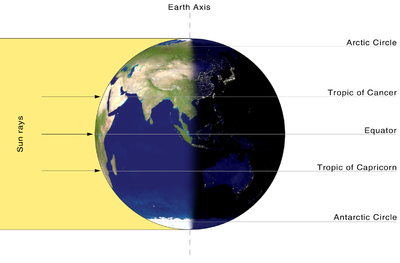
During an equinox, the
Earth's North and South poles are not tilted toward or away from the
Sun, and the duration of daylight is theoretically the same at all points on Earth's surface.
At an equinox, the Sun is at one of the two opposite points on the
celestial sphere where the
celestial equator (i.e.
declination 0) and
ecliptic intersect. These points of intersection are called
equinoctial points: classically, the
vernal point (
RA = 00
h 00
m00
s and longitude = 0°) and the
autumnal point (RA = 12
h 00
m 00
s and longitude = 180°).
The equinoxes are the only times when the
solar terminator is perpendicular to the Equator. As a result, the northern and southern
Hemispheres are illuminated equally.

Link to G+ Photo Album:
https://plus.google.com/u/0/photos/117645114459863049265/albums/6127756262910932609

Formosa Azalea


tulip magnolia

a blue sky day


crab apple

loropetulum

mayhaw


the sun

Buzzard in his bed

crab apple


crab apple


peach

azalea
...this is brendasue signing off from Rainbow Creek. See you next time!

pear
O+O


