

Hi Everybody!!
Some of you may remember Elvis from my last 5 years of posting in the Web Albums or past Blogs. It is such a joy to see this bird again this year. He left my place last October and (likely) went to Mexico for the winter with the other birds, then back in the spring to (likely) somewhere north of here, and finally back again to Waller County, Texas on August 12, same date as last year. He is the size of your thumb! My goodness, he has many flying miles in a year. Elvis is a Ruby-Throated Hummingbird. He has a full set of rubies called a gorget. In the photostudy below, you will see a juvenile male with only one ruby. In most light, the adult male's head appears to be black. The bird is in control of when he wants to flash the red glare. I have shared a Wikipedia page about the Ruby-Throated Hummingbird with some interesting facts about this tiny one. Most sightings of these birds results in one or two at a backyard feeder. A conclusion is drawn below that these are solitary birds and the adults are not social. This is not a true conclusion as I will show you throughout the migration this fall. Most people do not see these birds in trees where they sleep together in groups. They do chase each other and have big flying fights, but at the end of the day they all sit next to each other on the feeders and in the trees. I have never witnessed one killing another one no matter how fierce the fighting exercises. They click and chatter all day long and fight with the bees. I am in the country and not a city. These birds gather here for 4-8 weeks, sleep in the trees and wake up at dawn to eat and play all day. At the peak last year there were around 200. I will keep adding feeders and bee platters until everybody has enough. As time goes on, you will see how fat these little birds get! Enjoy!


This juvenile male has one ruby, but he can flash it red!

https://en.wikipedia.org/wiki/Ruby-throated_hummingbird
Ruby-throated hummingbird
From Wikipedia, the free encyclopedia
The ruby-throated hummingbird (Archilochus colubris) is a species of hummingbird.
As with all hummingbirds, this species belongs to the family Trochilidae and is currently included in the order Apodiformes. This small animal is the only species of hummingbird that regularly nests east of the Mississippi River in North America.
| Ruby-throated hummingbird | |
|---|---|
 | |
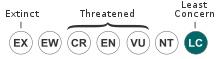
| Conservation status | |
| Scientific classification | |
| Kingdom: | Animalia |
| Phylum: | Chordata |
| Class: | Aves |
| Order: | Apodiformes[2] |
| Family: | Trochilidae |
| Genus: | Archilochus |
| Species: | A. colubris |
| Binomial name | |
| Archilochus colubris (Linnaeus, 1758) | |
 | |
| Summer-only range Winter-only range Migratory path | |
Description[edit]

The ruby-throated hummingbird is the smallest bird species that breeds in the Eastern United States andEastern Canada. This hummingbird is from 7 to 9 cm (2.8 to 3.5 in) long and has an 8 to 11 cm (3.1 to 4.3 in) wingspan. Weight can range from 2 to 6 g (0.071 to 0.212 oz), with males averaging 3.4 g (0.12 oz) against the slightly larger female which averages 3.8 g (0.13 oz).[3][4] Adults are metallic green above and greyish white below, with near-black wings. Their bill, at up to 2 cm (0.79 in), is long, straight, and very slender. As in all hummingbirds, the toes and feet of this species are quite small, with a middle toe of around 0.6 cm (0.24 in) and a tarsus of approximately 0.4 cm (0.16 in). The ruby-throated hummingbird can only fox-trot if it wants to move along a branch, though it can scratch its head and neck with its feet.[5][6]
The species is sexually dimorphic.[7] The adult male has a gorget (throat patch) of iridescent ruby red bordered narrowly with velvety black on the upper margin and a forked black tail with a faint violet sheen. The red iridescence is highly directional and appears dull black from many angles. The female has a notched tail with outer feathers banded in green, black, and white and a white throat that may be plain or lightly marked with dusky streaks or stipples. Males are smaller than females and have slightly shorter bills. Juvenile males resemble adult females, though usually with heavier throat markings.[8] The plumage is molted once a year, beginning in late summer.
Habitat, range and migration[edit]


The breeding habitat is throughout most of eastern North America and the Canadian prairies, in deciduous and pine forests and forest edges, orchards, and gardens. The female builds a nest in a protected location in a shrub or a tree. Of all hummingbirds in the United States, this species has the largest breeding range.[5]
The ruby-throated hummingbird is migratory, spending most of the winter in southern Mexico and Central America,[9] as far south as extreme western Panama,[10] and the West Indies. During migration, some birds embark on a nonstop 600 mile journey across the Gulf of Mexico from Panama to Florida.[9] The bird breeds throughout the eastern United States, east of the 100th meridian, and in southern Canada, particularly Ontario, in eastern and mixed deciduous forest.[11][12] In winter, it is seen mostly in Mexico.
Behavior and metabolism[edit]
Ruby-throated hummingbirds are solitary. Adults of this species are not social, other than during courtship (which lasts a few minutes); the female also cares for her offspring. Both males and females of any age are aggressive toward other hummingbirds. They may defend territories, such as a feeding territory, attacking and chasing other hummingbirds that enter.
As part of their spring migration, portions of the population fly from the Yucatan peninsula of Mexico across the Gulf of Mexico, arriving first in Floridaand Louisiana.[9] This feat is impressive, as a 800 km (500 mi), non-stop flight over water would seemingly require a caloric energy that far exceeds an adult hummingbird's body weight of 3 g (0.11 oz).[9] However, researchers discovered the tiny birds can double their fat mass to approximately one gram in preparation for their Gulf crossing, then expend the entire calorie reserve from fat during the 20 hour non-stop crossing when food and water are unavailable.[9]
Hummingbirds have one of the highest metabolic rates of any animal, with heart rates up to 1260 beats per minute, breathing rate of about 250 breaths per minute even at rest, and oxygen consumption of about 4 ml oxygen/g/hour at rest.[13] During flight, hummingbird oxygen consumption per gram of muscle tissue is approximately 10 times higher than that seen for elite human athletes.[9]
They feed frequently while active during the day. When temperatures drop, particularly on cold nights, they may conserve energy by entering hypothermic torpor.[9]
Flight[edit]
Hummingbirds have many skeletal and flight muscle adaptations which allow great agility in flight. Muscles make up 25–30% of their body weight, and they have long, blade-like wings that, unlike the wings of other birds, connect to the body only from the shoulder joint.[14] This adaptation allows the wing to rotate almost 180°, enabling the bird to fly not only forward but backward, and to hover in mid-air, flight capabilities that are similar to insects and unique among birds.[14] Hummingbird hovering has been estimated to be 20% more efficient than performed by a helicopter drone.[15]
Analysis of the main wing bone, the humerus, is thought to be specifically adapted for hovering flight. Hummingbirds have a relatively short humerus with proportionally massive deltoid-pectoral muscles which permit pronounced wing supination during upstroke when hovering.[16]
A hummingbird's ability to hover is due to its small mass, high wingbeat frequency, relatively large margin of mass-specific power available for flight and several anatomical features that include proportionally massive major flight muscles (pectoralis and supracoracoideus) and wing anatomy that enables the bird to leave its wings extended yet turned over (supine) during upstroke, generating lift that supports body weight and maneuvering.[17]
Hummingbirds achieve ability to support their weight and hover from wing beats creating lift on the downstroke of a wing flap and also on the upstroke in a ratio of 75%:25%, respectively, similarly to an insect.[17][18] Hummingbirds and insects gain lift during hovering partially through inversion of their cambered wings during an upstroke.[18] During hovering, hummingbird wings beat up to 80 times per second.[15]
Diet[edit]

Nectar from flowers and flowering trees, as well as small insects and spiders, are its main food. Although hummingbirds are well known to feed on nectar, small arthropods are an important source part of protein, minerals, and vitamins in the diet of adult hummingbirds. Hummingbirds show a slight preference for red, orange, and bright pink tubular flowers as nectar sources, though flowers not adapted to hummingbird pollination (e.g., willowcatkins) are also visited.[10] Their diet may also occasionally include sugar-rich tree sap taken from sapsucker wells. The birds feed from flowers using a long, extendable tongue and catch insects on the wing or glean them from flowers, leaves, bark, and spiders' webs.
Young birds are fed insects for protein since nectar is an insufficient source of protein for the growing birds.[10]
Reproduction[edit]
As typical for their family, ruby-throated hummingbirds are thought to be polygynous. Polyandry and polygynandry may also occur. They do not form breeding pairs, with males departing immediately after the reproductive act and females providing all parental care.[19]
Males arrive at the breeding area in the spring and establish a territory before the females arrive. When the females return, males court females that enter their territory by performing courtship displays. They perform a “dive display” rising 2.45–3.1 m (8.0–10.2 ft) above and 1.52–1.82 m (5.0–6.0 ft) to each side of the female. If the female perches, the male begins flying in very rapid horizontal arcs less than 0.5 m (1.6 ft) in front of her. If the female is receptive to the male, she may give a call and assume a solicitous posture with her tail feathers cocked and her wings drooped.
The nest is usually constructed on a small, downward-sloping tree limb 3.1 to 12.2 m (10 to 40 ft) feet above the ground. Favored trees are usually deciduous, such as oak, hornbeam, birch,poplar or hackberry, although pines have also been used. Nests have even been found on loops of chain, wire, and extension cords.[5] The nest is composed of bud scales, with lichen on the exterior, bound with spider's silk, and lined with fibers such as plant down (often dandelion or thistle down) and animal hair. Most nests are well camouflaged. Old nests may be occupied for several seasons, but are repaired annually.[10] As in all known hummingbird species, the female alone constructs the nest and cares for the eggs and young.
Females lay two (with a range of 1 to 3) white eggs about 12.9 mm × 8.5 mm (0.51 in × 0.33 in) in size and produce one to two broods each summer.[5] They brood the chicks over a period of 12 to 14 days, by which point they are feathered and homeothermic. The female feeds the chicks from 1 to 3 times every hour by regurgitation, usually while the female continues hovering. When they are 18 to 22 days old, the young leave the nest and make their first flight.[10]
Longevity and mortality[edit]

The oldest known ruby-throated hummingbird to be banded was 9 years and 1 month of age. Almost all hummingbirds of 7 years or more in age are females, with males rarely surviving past 5 years of age. Reasons for higher mortality in males may include loss of weight during the breeding season due to the high energetic demands of defending a territory followed by energetically costly migration.[9]
A variety of animals prey on hummingbirds given the opportunity. Due to their small size, hummingbirds are vulnerable even to passerine birds and other animals which generally feed on insects. On the other hand, only very swift predators can capture them and a free-flying adult hummingbird is too nimble for most predators. Chief among their predators are the smaller, swifter raptors like sharp-shinned hawks,merlins, American kestrels and Mississippi kites as well as domestic cats, loggerhead shrikes and even greater roadrunners, all of which are likely to ambush the hummingbird while it sits or sleeps on a perch or are distracted by breeding activities. Predatory lizards and bird-eating snakes may also prey on the species, especially on its tropical wintering grounds. Even large, predacious invertebrates have preyed on ruby-throated hummingbirds, including praying mantises (which have been seen to ambush adult hummingbirds at hummingbird feeders on more than one occasion), orb-weaver spiders, and green Darners. Blue jays are common predators of nests, as are several other corvids in addition to some icterids, bats, squirrels and chipmunks.[20][21][22][23]


...this is brendasue signing off from Rainbow Creek. See you next time.

O+O


